Contents
Originally reported by Radio Moldova.
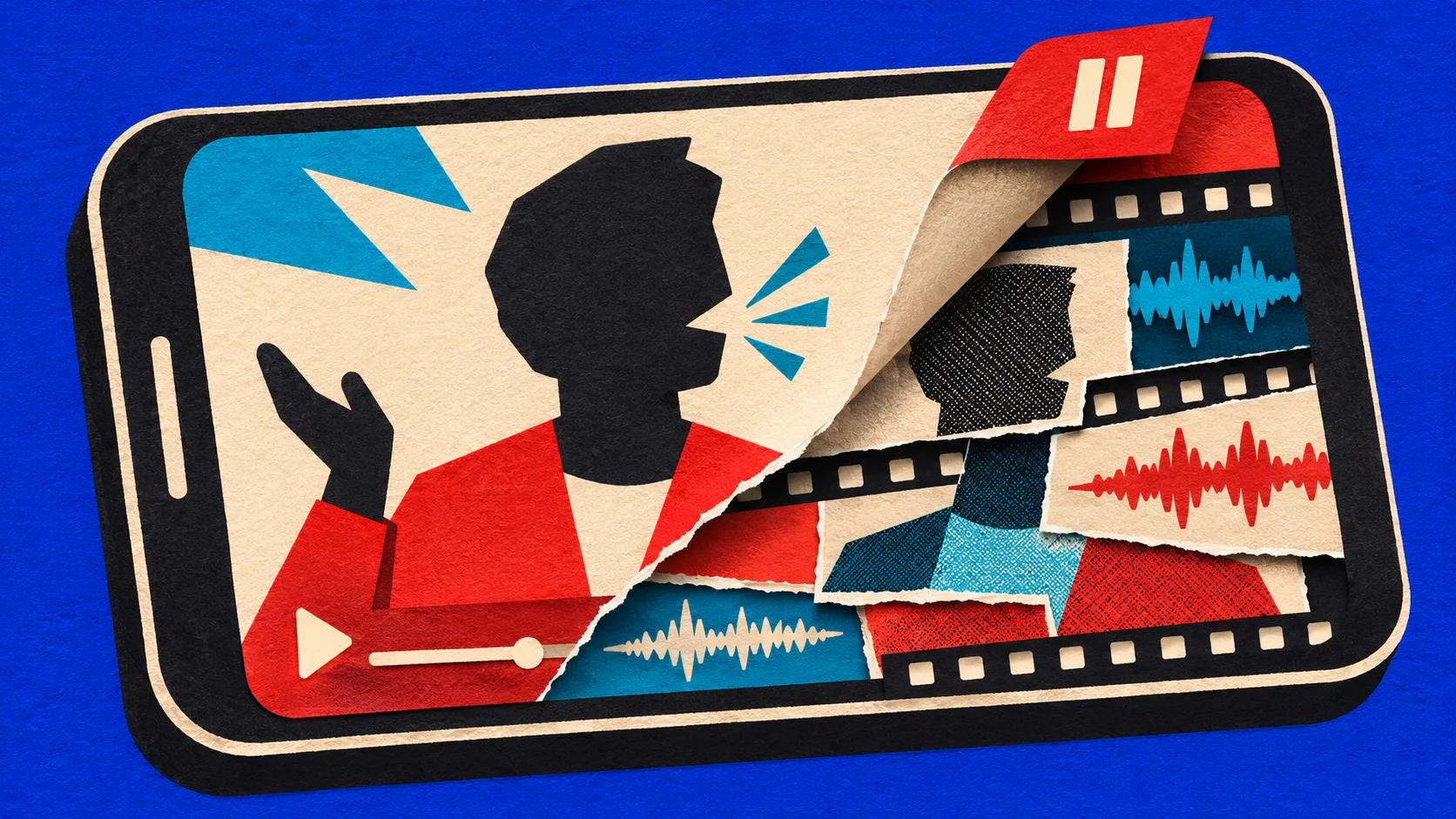
A video of a politician saying something shocking, a “news story” with a TV station’s logo, a video of soldiers that looks like it was filmed yesterday. Many are fake, and some have racked up hundreds of thousands of views before being debunked. The good news: in most cases, you don’t need special software to tell. Journalists who fact-check start with simple questions about the source, date and context.
We’ve compiled the steps, tools and real cases from Moldova documented by StopFals, the fact-checking platform of the Independent Press Association. All the examples below have been publicly debunked, and the descriptions follow the published fact-checks.
The 2-minute check: 8 steps
Don’t share it right away. If a video makes you angry or scared, or urges you to act immediately, that’s all the more reason to check it before sharing.
Look at who posted it. StopFals notes that such videos are usually shared by accounts created ad hoc, with no personal photos or contact details. In the cases below, the pages and channels that put out the fakes had been created a few months earlier or even that same day.
Look for the statement at the official source. Officials’ statements can be found on the official pages of the Presidency, Government or other institutions. If a politician has “announced” something important and you can’t find anything about it there or in reputable media, that’s a warning sign.
Check the TV station’s logo. If the video looks like a news report from a TV station, look for it on the station’s website or official page. Fakes often use the visual identity of real newsrooms.
Check the date. A real video may be old or filmed in another country. Search for the name of the event and the year, and compare them with what the video claims.
Do a reverse search. Take a screenshot of a clear frame and search for it with Google Lens or TinEye. You can find out whether the image has appeared online before, either earlier or in another context.
Look and listen carefully. Lips that don’t sync with the words, a lack of blinking, or unnatural eyebrow or facial movements can give away a deepfake. Their absence, however, does not prove that a video is authentic.
Check whether it has already been verified. Type a few keywords into Google Fact Check Explorer or StopFals. If you’re still unsure, don’t share the video and report it.
What kinds of fake videos circulate
Type | What it looks like | Example from Moldova |
|---|---|---|
Real images, false context | Authentic footage, but from another year, another country or another event | The video about the “Fire Shield 2025” exercise, edited from footage from 2024 and other events |
Deepfake video | A real person’s face is placed on someone else’s body or animated with AI | The video of Maia Sandu on the eve of the 2023 local elections |
AI-altered voice | The voice sounds like the person’s, but they did not say the words | The video with Igor Grosu’s altered voice, from August 2025 |
Real TV show, manipulated | Footage from a real TV show, with words put into the guest’s mouth | The deepfake of the CEC president, made using footage from a Jurnal TV show |
News logo used without authorization | The video imitates a TV news report to appear credible | An introduction featuring a Moldova 1 presenter; the Digi24 logo on a piece the TV station did not publish |
Deepfake trap ad | A politician or bank supposedly “offers you money” if you leave your details | Deepfakes featuring Maia Sandu and the maib logo promoted as ads on Facebook and Instagram |
Tools journalists use
You don’t need all of them. For most videos, a screenshot and a reverse search are enough.
Tool | What it checks | Free or paid | Works on a phone |
|---|---|---|---|
Google Lens | Searches by image or screenshot; helps you find where else a frame has appeared | Free | Yes, in the Google app; also available on a computer |
TinEye | Reverse image search: where an image came from, modified or older versions | Free for non-commercial use; paid API for businesses | Yes, in a browser |
Google Fact Check Explorer | Fact-checks already published by fact-checkers, searchable by keywords or image | Free, public website | Yes, in a browser |
InVID-WeVerify | Breaks a video into keyframes, performs reverse searches, reads metadata and magnifies details | Free | No, it’s an extension for Chrome and Firefox on a computer |
Content Credentials Verify | Shows a file’s history, if it has Content Credentials attached | Free, public website | Yes, in a browser |
SynthID Detector and Gemini | Looks for the invisible SynthID watermark in content made with AI by Google and its partners | Google says access is expanding to all users | Yes, through the Gemini app |
AI labels on TikTok and YouTube | Show that a video has been marked as generated or modified with AI | Free | Yes |
The last 3 tools have an important limitation: they only detect what has been marked. SynthID checks only content made with AI by Google and its partners, while Content Credentials are still being rolled out, so many files do not have such data. On YouTube, the label appears when the creator says they used AI. On TikTok, creators add the label themselves, and the platform may add it automatically only in certain cases, for example when a video has Content Credentials.
6 fake videos that circulated in Moldova
1. Maia Sandu “urges” voters to back Renaștere, November 2023
What the video showed: a purported Moldova 1 news report, followed by a fake Maia Sandu talking about the “burial of democracy” and urging people to vote for the Renaștere Party candidate for Chisinau City Hall.
How it was debunked: StopFals showed that it was a deepfake, including the voice, and that the lips did not sync with the words. The video appeared on Facebook on the eve of the local elections on 5 November 2023, on the “Moldova Prietenoasă” page, created in May 2023, and racked up over 400,000 views because it was promoted with paid ads.
The lesson: lots of views don’t mean a video is true. They can be bought.
2. CEC president “allows” EU interference in elections, July 2025
What the video showed: a deepfake in which Central Electoral Commission President Angelica Caraman supposedly said that the involvement of a country such as France in Moldova’s elections was not foreign interference.
How it was debunked: StopFals showed that the footage was taken from “The Shadow Cabinet,” broadcast by Jurnal TV on 22 May 2025, and manipulated. The CEC officially denied the video’s authenticity. The video was shared on 30 July 2025 by Telegram channels and Russian websites.
The lesson: look for the original recording. If the footage comes from a real TV show, the full version shows you what was actually said.
3. NATO soldiers firing at “Russian targets,” August 2025
What the video showed: footage suggesting that, during the “Fire Shield 2025” exercise in Moldova, soldiers were firing at targets bearing the faces of Russian soldiers.
How it was debunked: The U.S. Army told StopFals that the video used publicly available footage from the previous year’s exercise, uploaded on 12 August 2024, with the 2025 edition’s logo added, as well as footage from other events. The firing sequence was manipulated using footage from a military competition in North Carolina. The Ministry of Defense denied the claims and said the material included sequences manipulated with the help of artificial intelligence.
The lesson: a video can be a collage of real images. Reverse-searching a few frames shows where they came from.
4. Igor Grosu’s altered voice, August 2025
What the video showed: a piece in which Parliament Speaker Igor Grosu supposedly called citizens a “flock of rams” and said Moldovans would be sent to war.
How it was debunked: StopFals showed that the voice had been altered with artificial intelligence and that the video was using Digi24’s visual identity without authorization. The Romanian TV station had not published such content.
The lesson: a familiar logo guarantees nothing. Look for the piece on the TV station’s website.
5. Dorin Recean and gas that would be “twice as cheap,” September 2025
What the video showed: the face of then-Prime Minister Dorin Recean, with the headline “The cost of gas in Moldova will be reduced by more than 2 times starting September 8.”
How it was debunked: StopFals showed that the video had been manipulated with AI, which was apparent from the unnatural facial movements and lack of blinking. Neither the prime minister, the Government nor ANRE had announced such a measure. The video was published on 7 September on a YouTube channel created that same day.
The lesson: news that seems too good to be true, posted by a brand-new account, is almost certainly fake.
6. Maia Sandu and “money from maib,” April 2025
What the video showed: a deepfake in which the president supposedly announced that all citizens could receive money through maib.
How it was debunked: StopFals showed that the video was created with AI and posted by a recently created page managed from 3 Asian countries. Fake ads bearing the bank’s logo, sponsored on Facebook and Instagram, sent people to websites that asked for their personal data. The bank has never announced such “opportunities”.
The lesson: no institution gives you money for filling out a form in an ad. Don’t hand over your personal data.
How young people get their news
The YOUTH MIL 2025 Index, produced by the Media Center for Youth, asked 862 young people aged 14 to 19 from across the country how they get their news. TikTok is the preferred source of information for 26% of them, followed by Instagram (14%), news websites (13%) and Telegram (7%). When it comes to trust, the order changes: news websites are the most trusted source for 22%, conversations with family for 18%, and TikTok for just 6%.
Instagram is used daily by 89% of respondents, and TikTok by 87%. Only 46% say they check daily whether information is true before sharing it, while 36% have never reported a fake profile or a fake or aggressive post online.
The trend is not just local. According to the Reuters Institute’s Digital News Report 2025, across the 48 markets analysed, 44% of young people aged 18–24 say social media and video platforms are their main source of news.
How to report a fake video
Platform | What to tap |
|---|---|
TikTok | In the app, tap the Share button or press and hold the video, choose Report, select a reason and tap Submit. |
Tap the options in the top-right corner of the post and choose Report. Reasons include “False information” and “Scam, fraud or spam”. Reports are anonymous. | |
Use the Report option next to the post. You can also separately report the page or profile that posted the video. | |
YouTube | Below the video, tap More, then Report, and choose the relevant reason. Reports are anonymous. |
X | Tap the icon at the top of the post, choose Report post and follow the steps. |
Telegram | On Android, tap the message and choose Report; on iPhone, press and hold the message; on a computer, right-click. Then choose a reason. |
StopFals | On the StopFals Signals platform, enter a description of the false claim, along with a link or other evidence, and you can attach a file, such as a screenshot. |
Myths that can fool you
“If it looks realistic, it’s real.” False. Videos from Moldova have used real faces, voices and logos, and some were edited from genuine footage.
“It has hundreds of thousands of views, so it must be true.” False. The deepfake of Maia Sandu from 2023 reached more than 400,000 views because it was promoted with paid ads.
“An AI detector will tell me for sure if it’s fake.” No. Detection tools only find what they were built to find. SynthID recognizes only the watermark used by Google and its partners, while many files do not have Content Credentials. If a tool finds nothing, that does not mean the video is authentic.
“If it doesn’t have an AI label, it wasn’t made with AI.” False. On YouTube and TikTok, labels depend largely on what the creator declares. Someone who wants to deceive people won’t label their content.
“A voice can’t be faked that convincingly.” It can. StopFals explains that, thanks to neural networks, a voice can be manipulated so convincingly that it is practically indistinguishable from the real one. That is why the source matters more than your ears.
“If it has a TV station’s logo, it’s news.” False. The fake videos involving Igor Grosu and Maia Sandu used the visual identities of Digi24 and Moldova 1.
The basic rule for journalists is simple: if you can’t find out who first posted the video, when it was filmed and where, don’t share it. 2 minutes of checking can spare you from helping a fake reach even more people.
Sources
- StopFals.md, Asociația Presei Independente — Pe Facebook a apărut un video fals cu un pretins discurs al președintei Maia Sandu
- StopFals.md, Asociația Presei Independente — FALS: CEC a permis țărilor UE să se amestece în alegerile din R. Moldova
- StopFals.md, Asociația Presei Independente — FALS: În Moldova, militarii NATO se antrenează efectuând trageri asupra unor ținte înfățișând militari ruși
- StopFals.md, Asociația Presei Independente — „Turmă de berbeci”. Propaganda Kremlinului promovează un deepfake cu Igor Grosu
- StopFals.md, Asociația Presei Independente — Deepfake cu premierul Recean și „reducerea costului gazului în Moldova”
- StopFals.md, Asociația Presei Independente — Atenție! Imaginea unei bănci comerciale, folosită abuziv în diverse escrocherii online
- StopFals.md, Asociația Presei Independente — Topul dezinformărilor din R. Moldova în 2025
- Radio Moldova — A new deepfake with Maia Sandu on social networks. Statements by the Presidency
- Semnale StopFals!, Asociația Presei Independente — Semnalează un fals
- Centrul Media pentru Tineri — Indexul YOUTH MIL 2025: alfabetizarea informațională și media a tinerilor din Republica Moldova
- Reuters Institute for the Study of Journalism — Digital News Report 2025
- Google — Search what you see with Lens
- TinEye — Is TinEye free to use?
- TinEye — What can I do with TinEye?
- Google — About Fact Check Tools
- InVID project — InVID Verification Plugin
- Content Credentials / C2PA — Content Credentials Verify
- Google DeepMind — SynthID
- YouTube Help — Disclosing use of GenAI content
- TikTok Help Center — About AI-generated content
- TikTok Help Center — Report a post
- Instagram Help Center — Report a post or profile on Instagram
- Facebook Help Center — Report Content on Facebook
- YouTube Help — Report inappropriate videos, channels and other content on YouTube
- X Help Center — Report a Post, List, or Direct Message
- Telegram — Telegram FAQ: There is illegal content on Telegram. How do I take it down?
Written with AI assistance from the official sources above and checked by the editors.
Newsletter
Moldova, in your inbox
The stories that matter, every morning, in a single email. You choose what you get and in which language.
- Free
- No spam
- One-click unsubscribe