The fund from which the Ministry of Education and Research (MEC) finances national sports federations grew from 57 million lei in 2024 to 87 million in 2025 and around 91.5 million in 2026, according to ministry announcements. The nominal increase over two years is 60.5%. During the same period, the Government paid 33.08 million lei in awards for the Paris Olympic and Paralympic Games and approved the implementation programme for the “Sport 2030” Strategy for 2026–2028 on April 22, 2026.
Public documents, however, show two things that the announcements do not mention. The increase in 2025 was concentrated among a few federations, while almost the entire cost of the programme for sports facilities has no identified funding source. The MEC is now preparing new funding regulations that would once again change how the money is distributed.
In brief
Five federations—wrestling, canoe sprint, weightlifting, judo and judo for people with disabilities—received 21.1 million lei more in 2025 than in 2024, accounting for 70% of the total increase of 30 million. This is COMUNICA.MD’s calculation, based on MEC figures.
The “Sport 2030” Programme for 2026–2028 costs 472.9 million lei. Of this amount, 94.5% consists of “uncovered costs”, and 98.7% of those uncovered costs are planned for 2028.
For the programme’s four infrastructure objectives, one of which concerns at least 10 multi-purpose sports complexes, the state budget covers 2.3 million lei out of 447.2 million, or 0.5%.
The draft of the new funding regulations would cap funding for federations representing athletes with disabilities at 50% of the amount allocated to the federation for the respective sport. In 2025, the para judo federation, whose athlete Ion Basoc is a Paralympic medallist and current world champion, received 103% of the amount allocated to the judo federation.
How much does elite sport receive?
Since 2024, the MEC has distributed funding based on a points system, in accordance with Government Decision No. 22/2023. Points are calculated using results from the previous year, participation in the Olympic and Paralympic Games, and positions in world rankings. For 2026, the MEC announced 52.4 million lei for results in Olympic and Paralympic sports, 9.2 million for non-Olympic sports, and 7 million for federations with athletes at the Olympic Games and World Games. Another 4.2 million is earmarked for non-Olympic and non-Paralympic federations, while the reserve fund stands at 16.9 million.
Fund for national sports federations, million lei: 2024 – 57.0; 2025 – 87.0; 2026 – around 91.5
Top five federations in 2025, million lei: 2024 – 21.2; 2025 – 42.3; 2026 – not published*
Para judo as a percentage of the amount allocated to the judo federation: 2024 – 27%; 2025 – 103%; 2026 – not published*
International medals in the previous year, as reported by the MEC: 2024 – 545 (2023); 2025 – 731 (2024); 2026 – around 601 (2025)
Awards for Paris 2024 (GD No. 711/2024), million lei: 2024 – 33.08; 2025 – –; 2026 – –
MEC scholarships for athletes, million lei: 2024 – n.a.; 2025 – 46.7 (175 athletes); 2026 – n.a.
Sources: MEC announcements from December 2023, February 6, 2025, and February 12, 2026; annex to GD No. 711/2024. Federation amounts for 2024 are taken from the MEC list published by moldova.sports.md on January 6, 2024. COMUNICA.MD calculations. Nominal values. *The MEC order listing the amounts for each federation in 2026 could not be accessed (the mec.gov.md website did not respond on 29.10.2026).
The awards for Paris 2024 were allocated from the Government’s reserve fund and amount to 58% of the entire federation fund for 2024. Of the 33.08 million, 88% went to the six medal-winning athletes: silver medals for Anastasia Nichita in wrestling and Ion Basoc in para judo, and bronze medals for Denis Vieru and Adil Osmanov in judo, Serghei Tarnovschi in canoe sprint, and Oleg Crețul in para judo. Coaches received amounts equal to those awarded to the athletes.
Scholarships are a third source of funding. In 2025, the MEC announced scholarships totalling 46.7 million lei for 175 athletes, averaging around 22,200 lei per scholarship holder per month. The “Sport 2030” Programme shows that the number of scholarship holders rose from 111 in 2020 to 152 in 2024.
Where did the increase in 2025 go?
The MEC’s 2025 list shows five federations receiving more than 7.6 million lei each. The wrestling federation received 10.38 million, 17% more than in 2024. The increases for the other four ranged from 73% to 567%: judo +73%, weightlifting +81%, canoe sprint +275%, and judo for people with disabilities +567%, from 1.18 million to 7.84 million. All five had athletes who placed 1st–4th in Paris.
The mechanism worked as designed: Olympic results earned points and, in addition, guaranteed each federation 200,000 lei and each participating athlete 100,000 lei for four years. The effect, however, was to concentrate funding. The five federations accounted for 37% of the fund in 2024 and 49% in 2025, in a system with “around 70” federations, according to the MEC.
The MEC itself describes the problem. In the explanatory note for the draft of the new regulations, registered on August 3, 2026, the ministry writes that the current formula gives “general priority” to international results, “without taking into account criteria such as the number of athletes, the nature of events, or training costs”. According to the same note, “national sports federations with a small number of athletes may benefit, under the current formula, from a considerable amount of funding”.
The draft divides federations into six categories, with fixed shares of the fund: 44% for category C1, comprising Olympic federations with athletes who placed 1st–5th at the last two editions of the Games, and 20% for a complementary fund. Olympic federations would receive a guaranteed minimum component amounting to 30% of their category’s funding, divided equally. The variable component could no longer increase or decrease by more than 20% from one year to the next, with a few exceptions, including the first year of implementation. Under this rule, increases of 73–567% like those in 2025 would no longer be possible. The explanatory note estimates that the draft “does not require the allocation of additional financial resources” and has a “redistributive” impact.
What would the 50% cap mean for para judo?
The draft also includes a rule stating that a federation which administers only a sport for people with disabilities may not receive more than 50% of the amount allocated to the federation for the same sport. The explanatory note does not explain this provision.
The judo federation for people with disabilities is the most prominent federation affected. In Paris, Ion Basoc won silver and Oleg Crețul bronze. In September 2026, Basoc became the Republic of Moldova’s first world champion in para judo at the IBSA World Championships in Tbilisi, according to the International Paralympic Committee. In 2025, the federation received 7.84 million lei, while the judo federation received 7.61 million.
A static analysis by COMUNICA.MD shows the effect. If the cap had been applied to the 2025 amounts, para judo could have received no more than 3.80 million lei, 4.04 million (52%) less. This calculation is not a forecast, because the new regulations also change the formula for judo. It does, however, show that the rule would reverse the ranking in one of the few sports in which Moldova has achieved world-level results.
Infrastructure: a programme with no funding source for 94.5% of its costs
The “Sport 2030” Programme for 2026–2028 promises at least 10 multi-purpose sports complexes, 50 sports facilities in schools and universities, and more athletes at national team training centres. At the Government meeting on April 22, 2026, Minister Dan Perciun said, according to MOLDPRES, that the programme “comes with an investment commitment of 20 million euros for infrastructure”. After approval, the MEC was to seek “partners, donors and international creditors”.
The programme’s cost table (Chapter V, in the version presented to the Government) shows the gap between plans and funding. Of the total cost of 472.9 million lei, the state budget covers 22.7 million (4.8%), external assistance covers 3.2 million (0.7%), and 447 million (94.5%) consists of “uncovered costs”, including costs under the EU Growth Plan. Of the uncovered costs, 441.3 million is scheduled for 2028, the programme’s final year.
For the first four infrastructure objectives—that is, multifunctional complexes, sports grounds, training centres and existing stadiums with more than 500 seats—the costs covered amount to 2.3 million lei, while uncovered costs total 444.9 million. This means that just 0.5% of the costs of the promised infrastructure are covered by the budget. The uncovered amount would be about 22.7 million euros at the NBM’s average exchange rate for 2025, close to the announced commitment of 20 million. On 27 October 2026, the MEC also included “renovating 22 sports facilities” among its EU accession commitments, without specifying costs or deadlines.
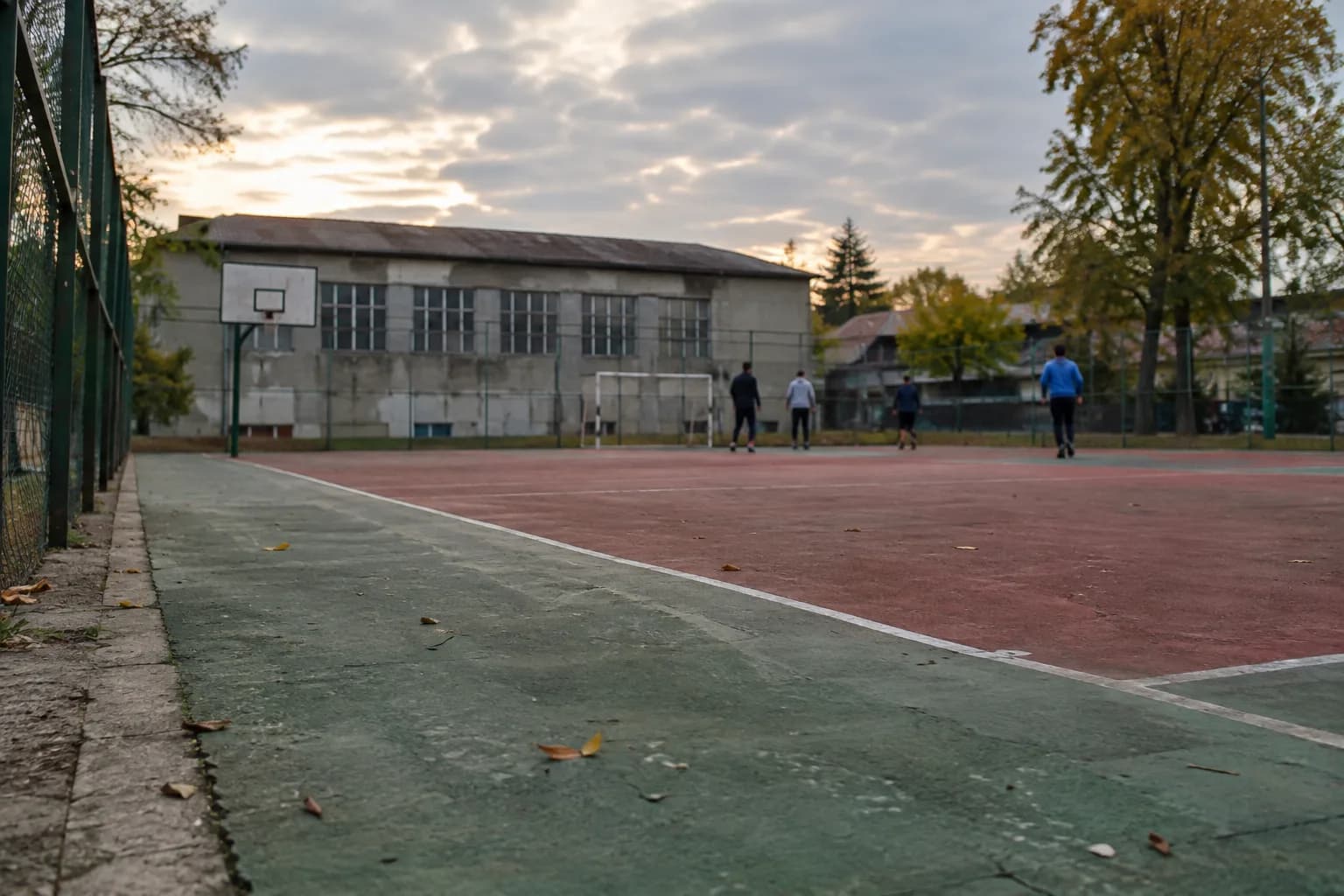
NBS data show where the programme starts from. In 2025, Moldova had 4,822 sports facilities, 26% fewer than in 1995. It had 24 swimming pools, compared with 50 in 1995, and 48 stadiums with at least 500 seats, compared with 58 in 2022. The programme notes that 18 of the country’s pools are in Chișinău and that Moldova has no national football stadium.
The human side of the system followed a different trajectory. Sports schools had 1,468 coaches in 2025, 47% more than in 1995, and 38,800 children and young people in training groups. In 2025, 71 titles of International Master of Sport were awarded, the highest number in the NBS series, which began in 1995.
The state’s figures do not add up
The analysis found several discrepancies in official documents:
Sports budget in 2024. The “Sport 2030” programme cites, on the basis of Finance Ministry data, 629.39 million lei at point 27 and 686 million at point 59. The difference is 56.6 million.
Federations fund in 2025. On 30 December 2024, the MEC announced 67 million lei, an increase of 52%. On 6 February 2025, the ministry announced 87 million, “over 37.5%” more. Compared with 57 million, however, 87 million represents an increase of 52.6%.
Medals in 2023. The same ministry reported 545 in one instance and 531 in another statement.
Number of federations. The MEC refers to “around 70”, while the programme says “approximately 90”.
NBS data. The programme’s explanatory note presents figures for 2023 that, according to the NBS database, largely correspond to 2021: 1,157 coaches, 220 candidates for Master of Sport titles and 20 International Masters.
What comes next?
The draft of the new regulations was registered by the MEC on 3 August 2026 and sent for review to the Ministry of Finance, the National Olympic and Sports Committee, the Paralympic Committee and the National Deaflympic Committee. As of 29 October, COMUNICA.MD had found no confirmation that it had been adopted. If adopted, the classification of federations will be approved for an Olympic cycle, and the amounts allocated to each category will be published when each funding round is launched. The draft also provides for an annual summary report on how the money is used, a document that does not exist today.
As for infrastructure, the question remains: where will the 447 million lei come from? The answer is not in the state budget, but in negotiations with external partners, while the programme’s timeline pushes almost all the spending into 2028.
COMUNICA.MD calculated all the values derived in this article on the basis of the documents listed below. Values are nominal unless otherwise specified.
Sources
- Ministerul Educației și Cercetării — Proiectul HG pentru aprobarea Regulamentului de finanțare a sportului de performanță conform criteriilor distincte și nota de fundamentare (nr. 12/393/26 din 03.08.2026)
- Guvernul Republicii Moldova — Programul de implementare a Strategiei „Sport 2030” pentru 2026–2028, proiect prezentat Guvernului (aprobat pe 22.04.2026)
- Ministerul Educației și Cercetării — Nota de fundamentare la Programul „Sport 2030” 2026–2028 (particip.gov.md)
- Guvernul Republicii Moldova — Comunicat din 22.04.2026: Guvernul a aprobat Programul de implementare a Strategiei „Sport 2030”
- MOLDPRES — Investiții în dezvoltarea sportului, infrastructură modernă (22.04.2026)
- Ministerul Educației și Cercetării — Finanțarea federațiilor sportive în 2026 (12.02.2026)
- Ministerul Educației și Cercetării — Finanțarea federațiilor sportive în 2025 (06.02.2025)
- Ministerul Educației și Cercetării — Comunicat din 30.12.2024 privind finanțarea federațiilor
- Ministerul Educației și Cercetării — Anunț privind 57 de milioane de lei pentru federații în 2024
- moldova.sports.md — Lista MEC pe federații, 2024 (06.01.2024)
- Ministerul Educației și Cercetării — Anexa la HG nr. 711/2024 (premii Paris 2024)
- Ministerul Educației și Cercetării — Gala Sportului 2025 (medalii 2025)
- Ministerul Educației și Cercetării — Angajamentele Republicii Moldova pentru aderarea la UE în educație, tineret și sport (27.10.2026)
- Comitetul Paralimpic Internațional — Historic gold for Moldova at IBSA Judo World Championships (2026)
- Biroul Național de Statistică — Statbank, tabelele CUL020100, CUL020300 și CUL020400 (actualizate pe 25.05.2026)
- Banca Națională a Moldovei — Cursurile oficiale zilnice MDL/EUR, 2025
Written with AI assistance from the official sources above and checked by the editors.
Newsletter
Moldova, in your inbox
The stories that matter, every morning, in a single email. You choose what you get and in which language.
- Free
- No spam
- One-click unsubscribe